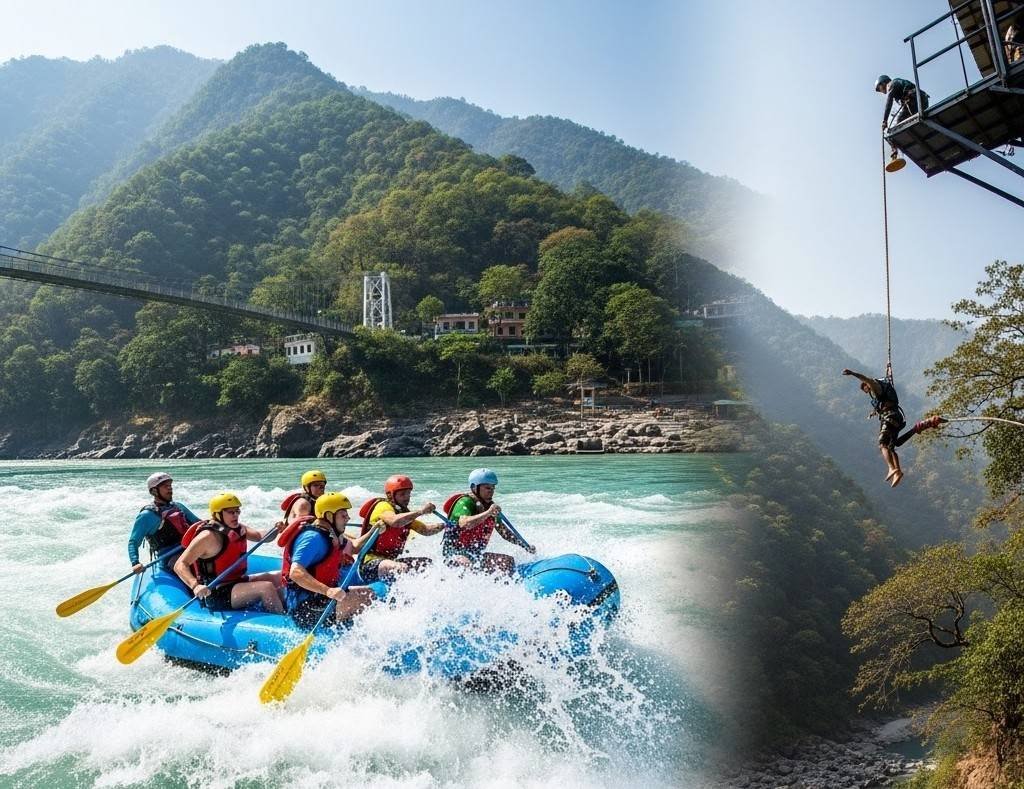
There's a moment on the Ganges — somewhere between the last rapid and the calm stretch of water before the rafts pull in — where everything goes quiet. Your heart is still racing, your clothes are soaked, and you're grinning like an idiot. That's Rishikesh doing what it does best.
Most people think of Rishikesh as a yoga and meditation destination. And yes, that side of the city is real and beautiful. But there's another Rishikesh — one with roaring rapids, a bungee platform 83 meters above the ground, and campsites where the only sound at night is the river and the wind. That's the Rishikesh this guide is about.
Whether you're a complete beginner or someone looking to push their limits, here's everything you need to know before you go.
1. River Rafting — The One Thing You Cannot Skip
If you do nothing else in Rishikesh, do this. River rafting on the Ganges is the single most iconic experience the city offers, and it lives up to every bit of the hype.
The rafting routes are divided by distance and difficulty. The most popular stretch runs from Shivpuri to Rishikesh — about 16 kilometers — and takes roughly two to two and a half hours. This route passes through some of the best rapids in the area, including names like Roller Coaster, Golf Course, and the infamous Club House rapid. It's exciting enough to get your adrenaline going but manageable enough for complete beginners.
If you want something more intense, the Marine Drive to Rishikesh stretch covers 36 kilometers and passes through Grade 4 rapids. This one is for people who are comfortable with water and want a longer, more physically demanding experience. It takes a full morning and is genuinely challenging in all the right ways.
Pricing varies depending on which operator you book with, but expect to pay between ₹600 and ₹1,000 for the Shivpuri route and ₹1,200 to ₹1,800 for the Marine Drive stretch. Always make sure your operator provides a certified guide, life jackets, helmets, and a safety kayaker who follows the raft throughout.
💡 Pro Tip: Avoid booking rafting through hotel desks or random touts near the market. Go directly to operators at Shivpuri or Marine Drive camp sites — you'll pay less and get better equipment.
2. Bungee Jumping — 83 Meters of Pure Courage
Jumpin Heights in Rishikesh runs the highest fixed bungee jumping platform in India, sitting 83 meters above a rocky gorge near Mohan Chatti village. If that number doesn't make your palms sweat even a little, you haven't fully processed it yet.
The jump itself takes about three seconds of freefall before the cord catches you. Those three seconds feel like significantly longer. The rebound pulls you back up, you bounce a few times over the gorge, and then they lower you slowly to the ground. From the moment they count down to the moment your feet touch solid ground again, the whole experience runs about four to five minutes — but it stays with you for years.
Bungee at Jumpin Heights costs around ₹3,500 and is well worth every rupee. They have a strict weight limit — between 40 kg and 110 kg — and will not allow anyone to jump who doesn't meet it. They also require you to sign a declaration form and will ask about any heart conditions, back problems, or recent surgeries. Take this part seriously — it's not just paperwork.
💡 Pro Tip: Book your bungee slot online in advance, especially if you're visiting on a weekend or during peak season. Walk-in slots run out by mid-morning and you'll end up waiting hours or missing your chance entirely.
3. Giant Swing and Flying Fox — For Those Who Want More
Jumpin Heights also offers two other experiences that deserve their own mention. The Giant Swing sends you off a cliff in a sitting harness and swings you out over the gorge in a massive pendulum arc. It's not as intense as bungee in terms of freefall, but the sensation of swinging out over open air with the valley beneath you is something else entirely. This one costs around ₹3,500 as well.
The Flying Fox is a zipline that sends you across a stretch of jungle at speed, giving you a brief but genuinely thrilling taste of what it feels like to fly. It's a shorter experience than the other two but a great option if someone in your group is not quite ready for bungee but still wants to do something adventurous.
💡 Pro Tip: Jumpin Heights offers a combo package that includes bungee, giant swing, and flying fox at a bundled price. If you're doing more than one, always ask for the combo — it saves around ₹1,000 to ₹1,500 compared to booking each separately.
4. Cliff Jumping — The Free Thrill That Nobody Talks About
Not everything in Rishikesh has to cost thousands of rupees. The Ganges has several natural spots where locals and experienced travelers go cliff jumping — leaping from rocky outcrops directly into the river below. The most popular spots are near Shivpuri and around the less crowded stretches of the riverbank.
Heights vary from about 10 feet for beginners to 30 or 40 feet for the more confident. The water is cold, clear in the non-monsoon months, and the adrenaline hit is surprisingly comparable to paid activities. There's a reason the locals do this for free every summer.
That said, do this only with someone who knows the spot. River currents change seasonally, rocks beneath the surface are not always visible, and jumping into unfamiliar water without knowing the depth is genuinely dangerous. Go with an experienced local guide or someone who has done that specific spot before.
💡 Pro Tip: Ask your rafting guide about safe cliff jumping spots on your route. Many guides are happy to stop at one or two spots during the trip if the group is interested — and it costs nothing extra.
5. Camping by the Ganges — The Real Heart of the Rishikesh Experience
The campsites between Shivpuri and Rishikesh are some of the best in the country. Set directly on the riverbank, surrounded by forest, with clean air and the sound of the Ganges running through everything — it's a world away from even the quietest city.
Most camps offer a package deal that includes dinner, breakfast, a bonfire in the evening, and either rafting or other activities the next morning. Prices generally run between ₹1,200 and ₹2,500 per person per night depending on the camp and the season. The quality varies significantly between operators, so read recent reviews before booking.
What makes camping in Rishikesh special is not just the location — it's the rhythm of the day. You wake up to the sound of the river, have chai by the water, go for a morning raft or a short hike, come back for a meal, and spend the afternoon doing nothing in particular. Evenings around the bonfire have a way of turning strangers into friends surprisingly quickly.
💡 Pro Tip: Carry warm clothes even if you're visiting in summer. Temperatures by the river drop significantly after sunset, and most camps don't provide heavy blankets. A light fleece jacket will make your evening around the bonfire much more comfortable.
6. Kayaking and Body Surfing — Less Known, Absolutely Worth It
Most visitors stick to group rafting and miss two experiences that are genuinely underrated. Kayaking on the Ganges gives you a completely different relationship with the river — you're in control, reading the water, navigating the current yourself rather than just holding on. Several operators in Rishikesh offer kayaking lessons for beginners as well as guided kayaking trips on calmer stretches of the river.
Body surfing — where you enter the rapids with just a board and your body, no raft — is something that fewer operators offer but is absolutely worth asking about. It's chaotic, wet, and thoroughly enjoyable if you're comfortable in water and up for something less structured.
💡 Pro Tip: If you've never kayaked before, take the half-day beginner lesson before attempting anything on the rapids. An hour of instruction makes an enormous difference to both your safety and your enjoyment.
7. Trekking Around Rishikesh — The Overlooked Side of the City
Rishikesh is the starting point for some of the most beautiful treks in the lower Himalayas, and almost nobody who comes for adventure thinks to include one. The Kunjapuri Temple trek is one of the most accessible — a two to three hour climb to a hilltop temple with panoramic views of the Himalayan ranges and the Ganges valley below. Start before sunrise and you'll have the view almost entirely to yourself.
The Neelkanth Mahadev Temple trek is longer and more demanding — about 12 kilometers one way — passing through dense jungle, small streams, and stretches of trail that feel genuinely remote. The temple at the top has real spiritual significance in the region, and the trek to reach it earns the experience in a way that driving there simply doesn't.
💡 Pro Tip: The Kunjapuri sunrise trek is one of the most beautiful things you can do in Rishikesh and it costs almost nothing. Start at 4 AM from Rishikesh, reach the top by sunrise, and you'll have a view that most people who visit the city never see.
8. Best Time to Visit for Adventure Activities
This matters more in Rishikesh than almost anywhere else because the river conditions change dramatically across the year.
October to November and February to May are the best months for rafting. The water levels are manageable, the rapids are active but not dangerous, and the weather is pleasant enough to enjoy the river without freezing or overheating. These are also the best months for camping and trekking.
June to September brings the monsoon, and during this period rafting is closed. The Ganges swells significantly, currents become unpredictable, and the risk level goes beyond what any responsible operator will work with. If you're visiting during monsoon, Rishikesh is still a beautiful place — but the adventure activities won't be available.
December and January are cold — properly cold by the river at night — but rafting still operates on most days and the camps are emptier, the prices are lower, and there's something genuinely atmospheric about the Ganges in winter.
💡 Pro Tip: February and March are the most underrated months to visit Rishikesh. The weather is warming up, the river is in great condition, crowds are minimal, and prices are significantly lower than peak season.
9. How Much Does a Rishikesh Adventure Trip Actually Cost
People often assume Rishikesh is expensive because of the bungee pricing. It's actually one of the most affordable adventure destinations in the country when you plan it right.
Accommodation in a decent guesthouse near Laxman Jhula runs between ₹500 and ₹1,200 per night. Camp packages along the river cost ₹1,200 to ₹2,500 and include meals and an activity. Food in the local restaurants around the market is cheap and good — a full meal rarely crosses ₹150 at a local place. Auto-rickshaws cover most of the city for ₹50 to ₹100.
If you spread the bigger costs across your trip — one day of rafting, one bungee jump, two nights of camping — a four to five day Rishikesh adventure trip comes to somewhere between ₹8,000 and ₹14,000 per person, all in. That includes travel within the city, accommodation, food, and all activities.
💡 Pro Tip: If you're traveling in a group of four or more, negotiate package rates with camp operators directly. Groups almost always get 15 to 20 percent off the listed price, and operators are often willing to customize the activity mix.
10. Safety — The Part Most People Skip Reading
Rishikesh's adventure industry is largely well-regulated, but the keyword there is largely. There are operators who cut corners on equipment, guides who overestimate their clients' abilities, and tourists who ignore instructions because they're caught up in the excitement.
Always check that your rafting operator provides ISI-certified life jackets and helmets that actually fit. A helmet that slides over your eyes the moment you hit water is not protection. Always listen to the safety briefing even if you've rafted before — every stretch of river is different. Never attempt to stand up in fast-moving water if you fall out of the raft — let the current carry you feet-first and wait for the guide to reach you.
For bungee, stick to Jumpin Heights. It's the only operator in Rishikesh with the infrastructure and safety standards that meet international benchmarks. Cheaper bungee operations exist — avoid them regardless of what they promise.
💡 Pro Tip: Travel insurance that specifically covers adventure activities is worth getting before your Rishikesh trip. Most standard travel policies exclude rafting and bungee. Check your policy carefully — the cost of adding adventure coverage is small compared to the peace of mind it gives you.
Before You Leave for Rishikesh
Rishikesh is one of those places that manages to be completely different things to completely different people — a spiritual retreat for some, an adrenaline destination for others, and a quiet riverside escape for the rest. What makes it remarkable is that all of those versions exist at the same time, in the same small city, without really getting in each other's way.
Go for the rapids. Stay for the sunsets over the Ganges. Eat at the small cafes near Laxman Jhula. Wake up early and walk to the river before anyone else is out. The adventure activities are what will bring you to Rishikesh — but the river itself is what will make you want to come back.
See you on the water.
You Might Also Like