Everyone has a Goa story. Some people go for the parties, some for the beaches, some just to slow down and breathe. But there's one thing almost every first-time visitor gets wrong — they assume Goa has to be expensive.
It doesn't.
With the right planning, Goa can be one of the most affordable and rewarding trips you take in India. This guide covers everything — where to stay, what to eat, how to get around, and how to actually enjoy Goa without watching your wallet empty out before day three.
1. North Goa vs South Goa — Pick the Right Side First
This is the most important decision you'll make before your trip, and most first-timers don't even think about it.
North Goa — Calangute, Baga, Anjuna — is louder, more commercial, and significantly more expensive. Restaurants charge tourist prices, beach shacks are overpriced, and the crowd is mostly loud and rushed. It's fun if that's what you're after, but it's hard on the wallet.
South Goa — Palolem, Agonda, Patnem, Benaulim — is quieter, cleaner, and 30 to 40 percent cheaper for the same experience. The beaches are less crowded, the food is more authentic, and the overall vibe is much more relaxed.
💡 Pro Tip: North Goa beaches like Calangute and Baga are expensive. South Goa is 40% cheaper for the same experience.
2. Where to Stay on a Budget
Avoid North Goa tourist traps. Head to South Goa — Agonda, Palolem, Patnem — for cheaper guesthouses and a more peaceful vibe. Hostels in Panaji start from ₹400/night.
Here's a rough breakdown of what to expect:
- Hostels (dorm beds) — ₹400 to ₹700 per night in Panaji, Mapusa, or South Goa
- Budget guesthouses — ₹800 to ₹1,500 per night, especially in South Goa villages
- Beach huts — ₹1,000 to ₹2,500 per night in Palolem and Agonda, great value for the experience
- Airbnb and homestays — often the best value, especially if you're staying a week or more
Book at least 2 weeks in advance during peak season — December to February. Prices double and rooms disappear fast.
💡 Pro Tip: Stay in Panaji or Margao if you want to explore all of Goa. These central locations save you transport costs and give you access to both North and South without paying beach premium prices.
3. Eat Like a Local — Skip the Tourist Beach Shacks
This is where most tourists waste the most money. A meal at a beach shack in Calangute can cost ₹500 to ₹800. A few minutes away, local Goan cafes called "tascas" serve the same quality food for a fraction of the price.
What to eat and where:
- Fish thali — rice, dal, sabzi, and fish curry. A full meal for ₹80 to ₹120 at local joints
- Goan pork chorizo pao — a spicy sausage stuffed in bread, available at local bakeries for ₹30 to ₹50
- Prawn balchão — a fiery Goan prawn pickle dish, try it at any family-run restaurant
- Bebinca — traditional Goan layered dessert, pick it up at a local sweet shop, not a hotel
- Fresh coconut water — ₹20 to ₹30 on the beach, not ₹80 like at resort shacks
Skip the beach shacks and try local Goan cafes known as "tascas." A full fish thali with rice, dal, and fish curry costs just ₹80–120.
💡 Pro Tip: Ask your guesthouse owner where the locals eat. That one question will save you hundreds of rupees every single day.
4. Rent a Scooter — It's the Best Decision You'll Make
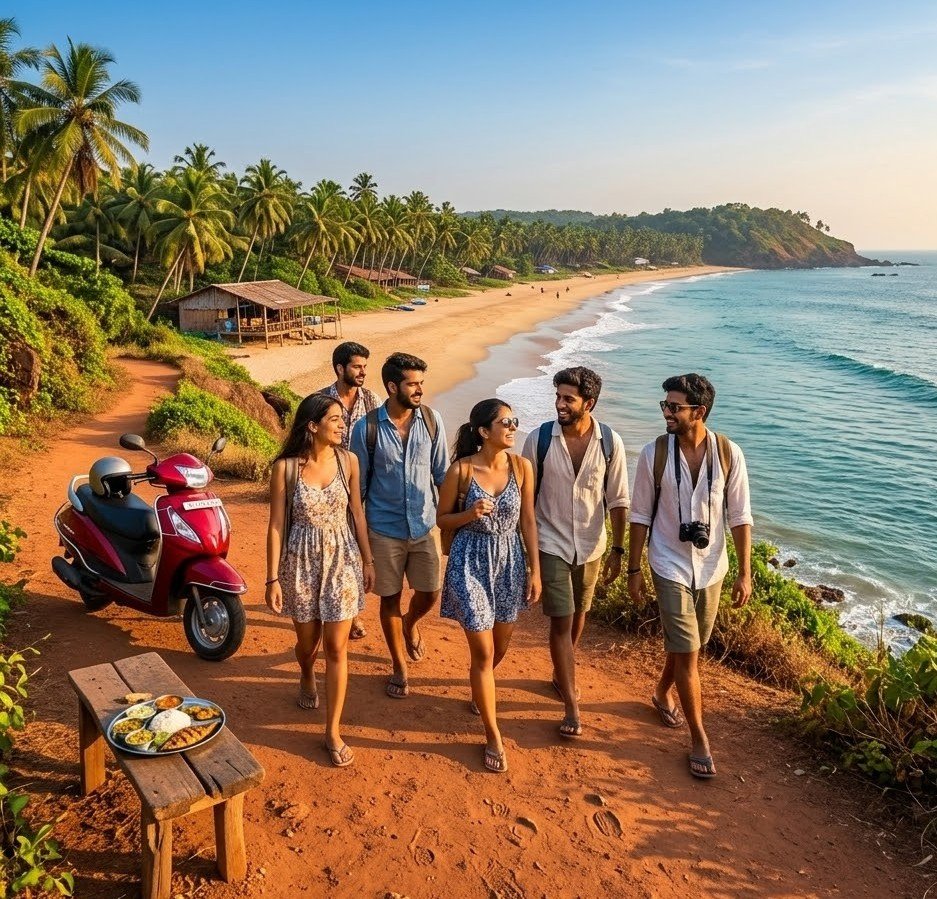
Auto-rickshaws are expensive for long distances. Rent a scooter for ₹300–500/day and explore at your own pace. Ensure you have a valid driving license.
Renting a scooter is genuinely the best way to see Goa. You can cover the entire coastline at your own pace, stop at hidden beaches, and avoid paying inflated taxi fares every single time you want to move.
What to keep in mind:
- Rent from a local shop, not a hotel — hotel rates are always marked up
- Always check the bike condition before taking it — document any scratches
- Carry your original driving license at all times — cops do check
- Petrol is cheap — a full tank will last you a full day of riding
- Wear a helmet — both for safety and to avoid fines
💡 Pro Tip: Rent for 3 or more days and negotiate a lower daily rate. Most shops will drop the price to ₹250–300/day for longer rentals.
5. Free Beach Experiences — The Best Things Cost Nothing
All beaches in Goa are free. Colva, Benaulim, and Morjim are beautiful without the commercial crowds. Sunrise at Cabo de Rama is completely free and breathtaking.
You don't need to spend money to enjoy Goa's best moments. Here's what costs absolutely nothing:
- Sunrise at Cabo de Rama — a ruined Portuguese fort with a view that will genuinely stop you in your tracks
- Swimming at Butterfly Beach — accessible only by boat or a short trek, completely untouched
- Evening walk at Palolem Beach — one of the most beautiful crescent beaches in India, free to walk and sit
- Watching the sunset at Vagator — dramatic red cliffs, crashing waves, no entry fee
- Exploring Old Goa churches — the Basilica of Bom Jesus and Se Cathedral are UNESCO sites, free to visit
💡 Pro Tip: The most beautiful sunsets in Goa are not at the expensive beach clubs. Chapora Fort and Cabo de Rama give you the same view for free.
6. How to Get Around Goa Without Overspending
Transport is where budgets quietly fall apart in Goa. Here's how to keep costs in check:
- Rented scooter — ₹300 to ₹500/day, best option for flexibility
- Local buses (Kadamba) — ₹10 to ₹30 per trip, slow but incredibly cheap
- Shared autos — available on busy routes, much cheaper than private autos
- Rapido and InDrive — significantly cheaper than Ola and Uber in Goa
- Avoid pre-paid airport taxis — walk 200 meters outside the airport and book through an app, saves ₹300 to ₹500 easily
💡 Pro Tip: Download InDrive before arriving in Goa. Fares are 40% lower than Ola or Uber for the same routes.
7. Best Budget Markets and Shopping
Goa's markets are a great experience — but knowing which ones to visit saves you from tourist trap pricing.
- Mapusa Friday Market — the most authentic local market in Goa. Fresh produce, spices, local cashews, everything is cheap
- Anjuna Flea Market (Wednesday) — more touristy but still great for clothes, jewelry, and souvenirs if you bargain hard
- Panjim Market — good for local Goan spices, bebinca, cashew feni, and everyday shopping
- Night Market at Arpora (Saturday) — more expensive but a great experience for an evening out
Bargaining is expected at all these markets. Start at half the quoted price and work your way up. Never accept the first number.
💡 Pro Tip: Buy Goan cashews and spices at Mapusa Market — they cost 40% less than at airport shops or tourist stores near the beaches.
8. Things That Are Free in Goa (Use This List)
Most tourists don't realise how much Goa offers for free. Here's a quick list:
- Basilica of Bom Jesus — UNESCO World Heritage Site, free entry
- Se Cathedral, Old Goa — stunning Portuguese architecture, free
- Fontainhas (Latin Quarter, Panaji) — a walk through here feels like stepping into Portugal, completely free
- Dudhsagar Waterfall trek — the trek itself is free, only the jeep safari inside the park costs money
- All public beaches — no entry charge anywhere in Goa
- Chapora Fort — free entry, incredible views, where Dil Chahta Hai was filmed
💡 Pro Tip: Spend one full day in Panaji — the capital city. It's underrated, beautiful, and almost everything there is free. Most tourists skip it entirely.
9. Budget Breakdown — What a Goa Trip Actually Costs
Here's a realistic daily budget breakdown so you can plan properly:
Budget Traveler (₹1,500 – ₹2,000/day)
- Hostel dorm bed: ₹500
- Three local meals: ₹400
- Scooter rental: ₹350
- Petrol: ₹100
- Activities and entry fees: ₹200
- Miscellaneous: ₹200
Mid-Range Traveler (₹3,000 – ₹4,500/day)
- Budget private room: ₹1,200
- Meals mix of local and restaurants: ₹800
- Scooter rental: ₹400
- Activities: ₹500
- Shopping and miscellaneous: ₹600
💡 Pro Tip: A 5-day Goa trip for a solo budget traveler can be done comfortably in ₹8,000 to ₹10,000 including travel from most cities in India.
10. Things to Avoid in Goa — Save Money and Stay Safe
A few things that will drain your budget or ruin your trip if you're not careful:
- Avoid taxis from the airport without checking app rates first — they charge 2x to 3x the normal fare
- Don't eat at beach shacks in Calangute and Baga — same food costs 4x more than a local dhaba
- Avoid booking water sports on the beach directly — go through your guesthouse or a trusted operator
- Don't carry valuables to the beach — theft does happen, especially during crowded evenings
- Avoid buying alcohol at beach clubs — buy from a local government wine shop (taverna) and save 60 to 70 percent
💡 Pro Tip: Government liquor shops in Goa (called tavernas) sell beer from ₹80–100. The same beer at a beach club costs ₹250–350. Stock up smartly.
One Last Thing Before You Book
Goa is not just a party destination — that's the biggest misconception people carry with them. Yes, it has nightlife. But it also has centuries-old churches, quiet fishing villages, backwaters, spice farms, and stretches of coastline where you can sit for hours without seeing another tourist.
The real Goa is not expensive. The tourist version of Goa is.
Go slow, eat local, ride a scooter, and talk to the people who actually live there. That version of Goa will stay with you long after you've come back home.
Safe travels. Susegad.
You Might Also Like